Machine embroidery thread is one of the most misunderstood yet critical components of embroidery success.
Many embroiderers focus on designs, machines, and stabilizers—but thread quality, weight, and type directly impact:
- Stitch appearance
If you’ve ever experienced:
- Thread breaking repeatedly
Thread choice may be the real issue.
This 2026 edition guide will cover:
- All major thread types
By the end, you’ll understand embroidery thread at an expert level.
What Is Machine Embroidery Thread?
Machine embroidery thread is specially engineered for:
- High-speed stitching (600–1,000 stitches per minute)
Unlike standard sewing thread, embroidery thread is designed for surface visibility rather than structural seams.
The finish and composition are optimized for decorative top stitching.
The 4 Main Types of Machine Embroidery Thread
Understanding material type is the foundation of thread mastery.
Polyester Embroidery Thread
Polyester is the most widely used embroidery thread worldwide.
Why Professionals Use Polyester
- Extremely strong
Best For:
- T-shirts
Polyester handles friction and tension better than rayon, making it ideal for high-speed production.
If you are running an embroidery business, polyester should be your default thread choice.
Rayon Embroidery Thread
Rayon is known for its brilliant shine and silk-like finish.
Why Designers Love Rayon
- Smooth glossy finish
Best For:
- Luxury garments
Downsides:
- Slightly weaker than polyester
Rayon is beautiful—but not always practical for heavy commercial use.
Metallic Embroidery Thread
Metallic thread adds a dramatic, reflective finish.
It is made with a polyester core wrapped in metallic foil.
Best For:
- Logos
Challenges:
- Prone to breakage
Always reduce machine speed when using metallic thread.
Cotton Embroidery Thread
Cotton thread creates a matte, natural look.
Best For:
- Vintage designs
Downsides:
- Less shine
Cotton gives character—but not shine.
Thread Weight Explained (Critical for Professional Results)
Thread weight determines thickness.
The confusing part?
Lower number = thicker thread.
40wt Thread (Industry Standard)
Used in approximately 90% of machine embroidery.
Perfect balance of:
- Coverage
Recommended for:
- Logos
If unsure, choose 40wt.
60wt Thread (Fine Detail Thread)
Much thinner.
Used for:
- Small lettering
Often paired with smaller needles.
30wt Thread (Thicker Bold Thread)
Provides heavier coverage.
Used for:
- Bold outlines
Requires larger needle and tension adjustment.
Thread and Needle Matching (Professional-Level Control)
Thread problems often come from incorrect needle pairing.
Standard Matching Chart
| Thread |
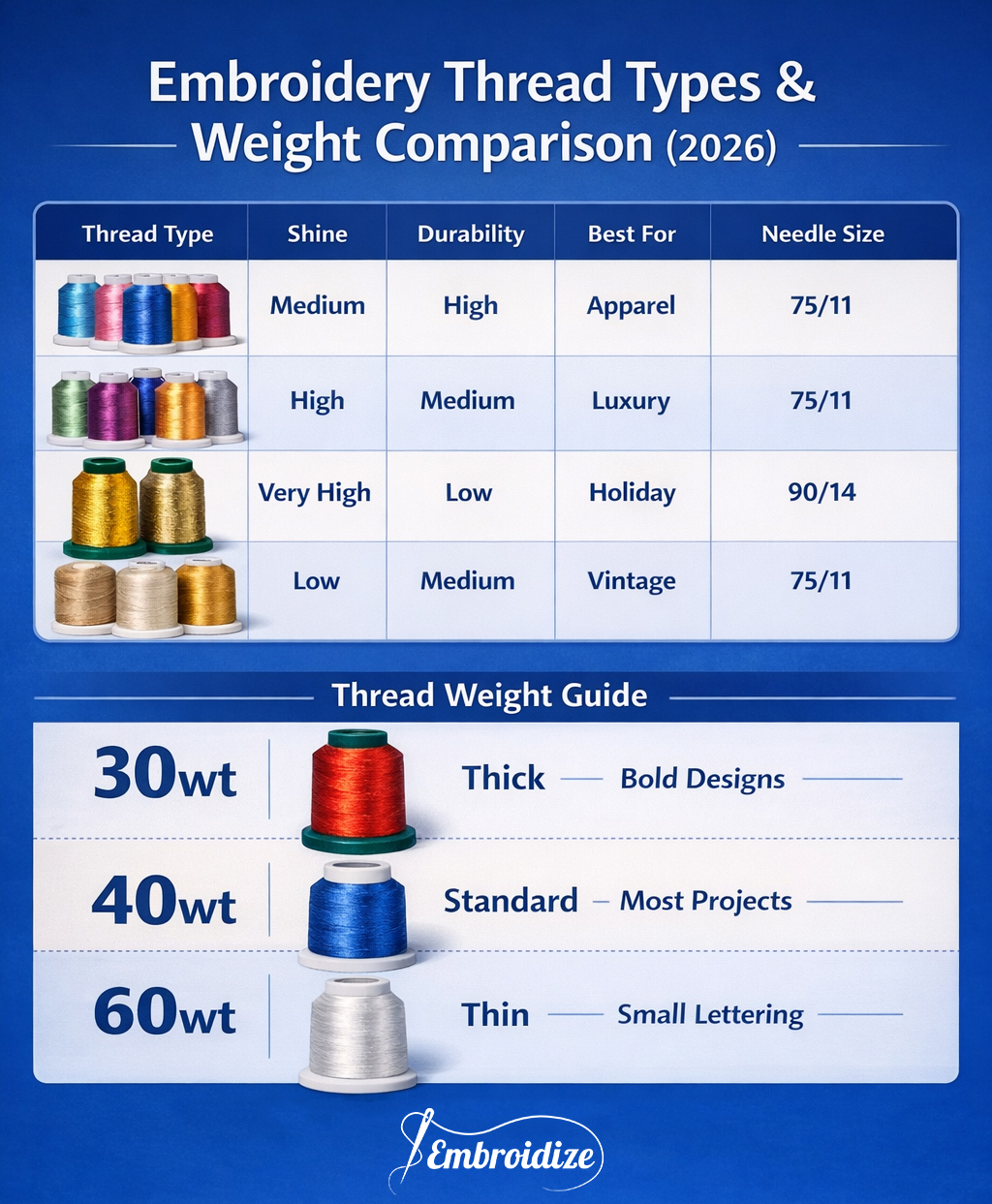
Using wrong needle size can cause:
- Thread shredding
Needle choice matters as much as thread.
Polyester vs Rayon – Which Is Better?
This is the most searched question in embroidery.
Polyester Wins In:
- Durability
Rayon Wins In:
- Shine
For businesses: Polyester is safer.
For boutique designers: Rayon may offer aesthetic advantage.
Bobbin Thread – The Hidden Hero
Bobbin thread is typically:
- 60wt to 90wt
Never use regular sewing thread in the bobbin.
It increases bulk and can disrupt tension balance.
High-quality bobbin thread reduces thread break issues significantly.
Thread Tension & Troubleshooting Guide
Thread tension is influenced by:
- Thread weight
(For full stabilization science, see our Machine Embroidery Stabilizer Bible (2026 Edition).)
Common Thread Problems & Fixes
Thread Breaking Frequently
Causes:
- Cheap thread
Fix:
- Change needle
Loops Under Fabric
Usually upper thread tension is too loose.
Adjust tension slightly tighter.
Thread Shredding
Often metallic thread without metallic needle.
Switch needle immediately.
Dull-Looking Designs
Low-quality thread or wrong material choice.
Upgrade thread type.
Professional Thread Brand Recommendations (2026)
Trusted commercial brands include:
- Madeira
These brands are widely used in production embroidery environments.
Consistency matters more than brand switching.
Thread Storage & Longevity
Improper storage weakens thread.
Store thread:
- Away from sunlight
Heat and UV degrade fiber integrity.
Proper storage can double thread lifespan.
Thread Selection by Project Type
| Project |
Commercial Thread Strategy for Embroidery Businesses
If you run a business:
- Choose one main brand.
Consistency builds professional output.
Advanced Thread Concepts (Expert Level)
Twist & Ply
Higher ply threads often provide smoother coverage.
Sheen vs Luster
Rayon reflects light differently than polyester.
Thread Density Interaction
Thread weight affects stitch density.
Adjust density when switching between 40wt and 30wt.
How Thread Works with Stabilizer
Thread performance is connected to stabilization.
Without proper backing, even premium thread will fail.
Testing Thread Quality (Professional Method)
To test thread:
- Stitch a dense satin sample.
Observe:
- Shine retention
Best Thread for Beginners
If you're just starting:
- Use 40wt polyester
Beginners should focus on stability before experimentation.
FAQ - Frequently Asked Questions
What is the best thread for machine embroidery?
40wt polyester thread is considered the best all-around option for machine embroidery because it is durable, colorfast, and suitable for most fabrics including apparel, hats, and towels.
Is polyester better than rayon for embroidery?
Polyester is stronger and more durable than rayon, making it ideal for commercial embroidery and garments that require frequent washing. Rayon offers a softer and shinier finish but is slightly less durable.
What thread weight should I use for machine embroidery?
40wt thread is the industry standard for most machine embroidery projects. 60wt is used for small lettering and fine detail, while 30wt is thicker and used for bold decorative designs.
Why does my embroidery thread keep breaking?
Thread breaking is usually caused by incorrect needle size, high machine speed, poor-quality thread, or incorrect tension settings. Switching to a quality embroidery thread and matching the proper needle size can reduce breakage.
Can I use regular sewing thread for machine embroidery?
No. Regular sewing thread is not designed for high-speed decorative stitching and may cause tension problems, breakage, and dull-looking designs.
What needle should I use with 40wt embroidery thread?
A size 75/11 embroidery needle is recommended for 40wt polyester or rayon thread. For metallic thread, a 90/14 metallic needle is typically required.